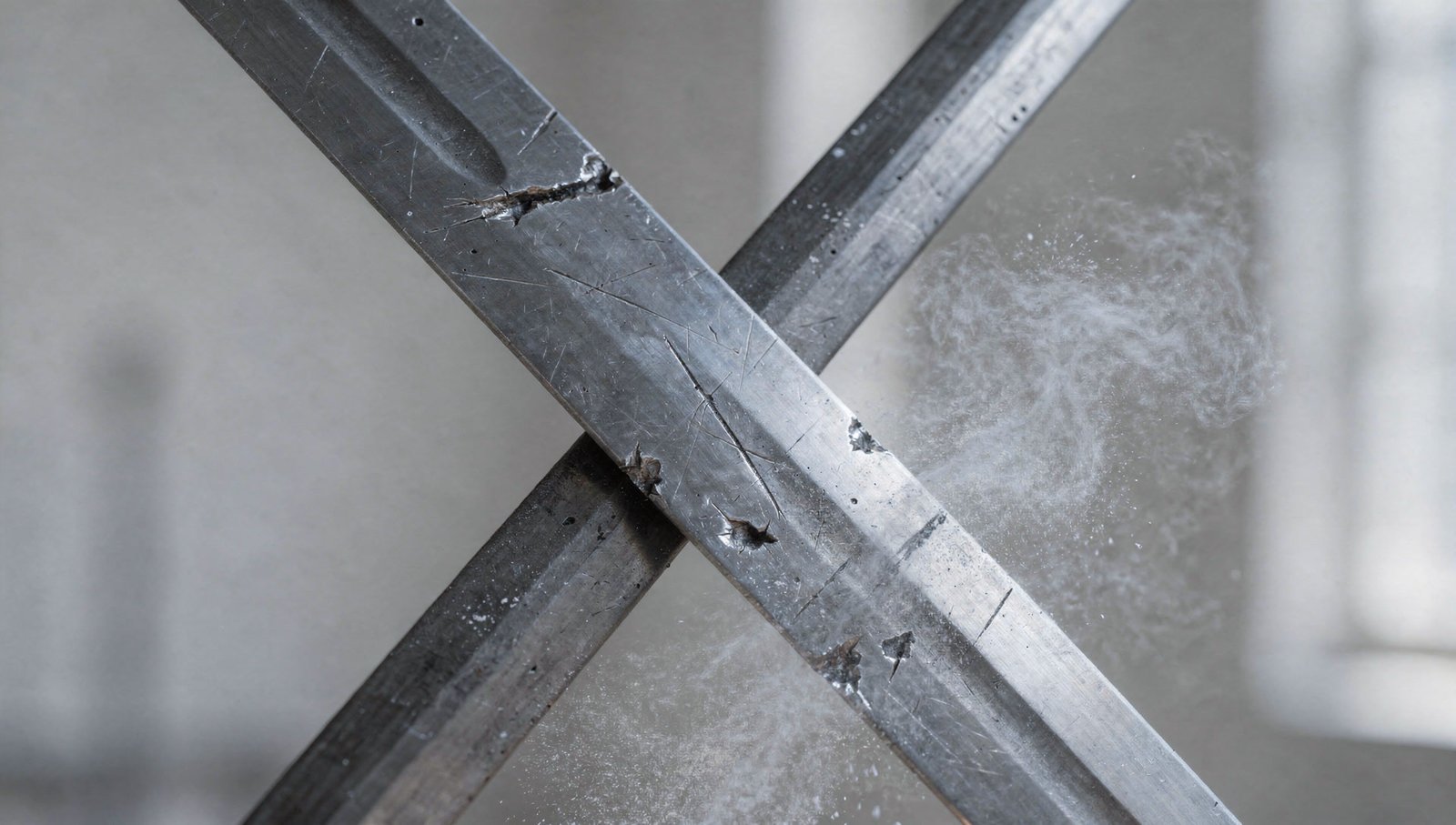
A steel blade cuts through the air. Another meets it with a crack. The two fencers break apart, adjust their distance and try again.
Just beyond the training floor, a laptop is open to a scan of a medieval manuscript.
That unlikely pairing—a centuries-old book and two people in modern protective gear—is the heart of Historical European Martial Arts, better known as HEMA. It is where historical research becomes physical practice, where an obscure illustration becomes a question, and where the answer has to work against someone who moves, thinks and strikes back.
HEMA looks dramatic. It is also patient, technical and deeply collaborative. To understand it, forget the idea of simply “fighting like a knight”. The real story is far more interesting.
So, what exactly is HEMA?
HEMA is an umbrella term for the study and practice of martial traditions developed in Europe. As the International Federation of Historical European Martial Arts explains, the modern practice is grounded in research into sources that recorded those traditions.
Those sources include handwritten fight books, printed fencing treatises, illustrations and other historical evidence. They preserve systems for fighting with the longsword, rapier, sword and buckler, sabre, dagger and polearms, as well as wrestling, armoured combat and more.
That variety matters. HEMA is not one style, one weapon or one set of tournament rules. A club studying fifteenth-century Italian longsword may train very differently from one working with seventeenth-century rapier or nineteenth-century military sabre. What connects them is a shared method: begin with historical evidence, turn it into movement, and test the interpretation through practice.
The result sits somewhere between archive, laboratory and martial arts school.
The books that refused to stay closed
Europe’s martial traditions were not passed down in one unbroken line. Some changed beyond recognition; others disappeared from living practice. What survived were traces—sometimes detailed, sometimes frustratingly brief.
One of the most famous is Royal Armouries Manuscript I.33, a German sword-and-buckler book from around the 1320s and the oldest surviving European treatise devoted to medieval martial arts. Its painted figures adopt guards, attack and respond across pages of parchment.
Around 1410, the Italian fencing master Fiore dei Liberi produced The Flower of Battle, an illustrated work covering unarmed combat, daggers, swords, spears, poleaxes, fighting in armour and combat on horseback. The Getty’s introduction to the manuscript offers a glimpse of just how ambitious these books could be.
Many more survive. The free online collection Wiktenauer brings together scans, transcriptions, translations and research relating to well over a thousand books and manuscripts. It has transformed material once available only to specialists into something a curious fencer can explore from home.
But a source is not a set of flat-pack instructions. A drawing may compress several moments into one image. A technical word may have no neat modern equivalent. An author may explain the exceptional action while assuming that the reader already knows the basics. Pages may be damaged, missing or copied by someone who misunderstood the original.
Reading is only the beginning.
How do you rebuild a martial art?
Imagine a fencing book tells you to step “offline”, displace an incoming cut and strike in the same motion. That sounds clear—until you have to decide how far to step, when the blades meet, where your weight should be and what your opponent is doing during all of this.
HEMA practitioners work through those gaps in a repeating cycle:
- Read the source. Study the language, images and historical context, often comparing several versions or translations.
- Form an interpretation. Turn the written instruction into a physical action.
- Drill it. Begin slowly and cooperatively so both partners can examine the mechanics.
- Add resistance. Change the timing, distance or level of pressure and see whether the action still holds together.
- Return to the source. Use what happened in training to ask better questions of the text.
This does not produce absolute certainty. Modern fencers cannot recreate every condition, assumption or danger of the past, and sparring is not a time machine. What the process can produce is a well-reasoned, functional interpretation—one that fits the evidence and survives honest testing.
That willingness to revise is essential. In HEMA, “we have always done it this way” is not the end of an argument. It may be the start of a new experiment.
What does HEMA training look like?
A typical class is less chaotic than the phrase “sword fighting” suggests. It might begin with movement and footwork, continue into guards, cuts or thrusts, and then develop those fundamentals through paired exercises. More experienced students may fence freely under agreed rules and intensity. Some clubs also hold source-study sessions, practise cutting with sharp swords under controlled conditions, prepare for tournaments or explore several weapons.
Safety shapes all of it. Practitioners use purpose-made blunt or synthetic trainers, fencing masks and protection suited to the weapon and level of contact. Faster or less cooperative work requires more equipment, more control and more trust. Good training partners are not trying to “win” every drill; they are giving each other the right problem to solve.
Competition is part of HEMA, but it is not the whole of HEMA. Tournaments can reveal whether skills work under speed and pressure, and many people love the athletic challenge. Others are drawn more strongly to research, technical practice, coaching or simply fencing with friends. Most clubs contain a mixture.
Beginners are not expected to arrive fit, knowledgeable or carrying a sword. Many clubs have loan equipment for introductory sessions. Curiosity, comfortable sports clothing and a willingness to learn are usually the more useful starting kit.
What HEMA is—and what it is not
Because swords appear in several hobbies and sports, HEMA is easy to confuse with its neighbours.
It is not historical reenactment, although some practitioners enjoy both. Reenactment often aims to recreate the appearance and experience of a period; HEMA focuses on reconstructing martial systems from evidence.
It is not stage combat, which is designed to tell a story safely and convincingly for an audience. HEMA techniques are studied as martial actions, even though training methods are adapted for safety.
It is not buhurt or armoured medieval combat, where heavily armoured competitors fight under a modern ruleset. HEMA can include historical combat in armour, but its methods are tied to specific sources.
And it is not the same as modern sport fencing, though the two share parts of a long and complicated family history. HEMA includes weapons, periods and tactical conventions that fall outside today’s foil, épée and sabre disciplines.
The boundaries can overlap, and many people happily cross them. The useful distinction is purpose: HEMA asks what the surviving evidence can teach us about a historical fighting art, then explores the answer through practice.
Why do people fall in love with it?
The obvious answer is swords. They are difficult to ignore.
The better answer is that HEMA offers several kinds of discovery at once. History becomes tangible: a line in a manuscript changes the angle of your hands; a faded illustration alters the way you stand. Research stops being something that happens only at a desk.
It is physically absorbing, too. Fencing develops balance, coordination, timing, distance and the ability to make decisions quickly. Strength helps, but brute force solves fewer problems than beginners expect. A well-timed simple action often defeats a hurried, complicated one.
Then there is the puzzle. Your partner is not a target but a thinking person who changes the problem in real time. Every exchange asks: What did I notice? What did I miss? What can I change next time?
Finally, there is the community. No one learns to fence alone. Progress depends on partners who can challenge one another without letting ego take over, and on instructors who make difficult material understandable. At its best, a HEMA club is serious about safety, generous with knowledge and delighted by the fact that adults are allowed to play.
Lessons that travel beyond the fencing hall
HEMA teaches a particular kind of humility. A historical source can be authoritative without being easy to understand. A beautiful interpretation can still fail under pressure. A mistake can be information rather than a verdict.
It also demonstrates why structure enables freedom. Masks, gloves, training weapons, agreed intensity and mutual care do not diminish the practice; they make sustained exploration possible. The safer and more trusting the environment, the more honestly people can test themselves.
Most of all, HEMA rewards active curiosity. Read closely. Try the idea. Pay attention to the result. Change your mind when the evidence demands it. That is good practice in a fencing hall—and almost everywhere else.
Ready to try it?
Start with a club, not a shopping basket. A good beginner programme will introduce movement, safety and basic technique before expecting you to fence at speed. Ask which traditions the club studies, how new students progress, what equipment is provided and how contact is managed.
The HEMA Alliance club finder is a useful starting point, and national HEMA federations can often direct you to groups in your country. Visit, watch a class if the club allows it, and pay attention to how people treat their training partners. Culture matters as much as curriculum.
Your first attempts will probably feel awkward. That is not failure; it is the beginning of learning a new language—one spoken through distance, timing and motion.
Centuries ago, fencing masters set their knowledge down in ink and paint. Today, people open those books, pick up safe training weapons and continue the conversation.
History does not feel very distant when it is moving towards you.
Sources and further reading
- International Federation of Historical European Martial Arts: About HEMA
- Wiktenauer: a free library of HEMA books and manuscripts
- Wiktenauer: Royal Armouries Manuscript I.33
- The J. Paul Getty Museum: Don’t Try This at Home—The Medieval Martial Arts Manual
- The Metropolitan Museum of Art: The Academy of the Sword—Illustrated Fencing Books, 1500–1800
- Keith Farrell: What Is HEMA?